


Caffeine in Pre-Workout: Benefits & Safety Guide
Published on 18 Aug, 2026
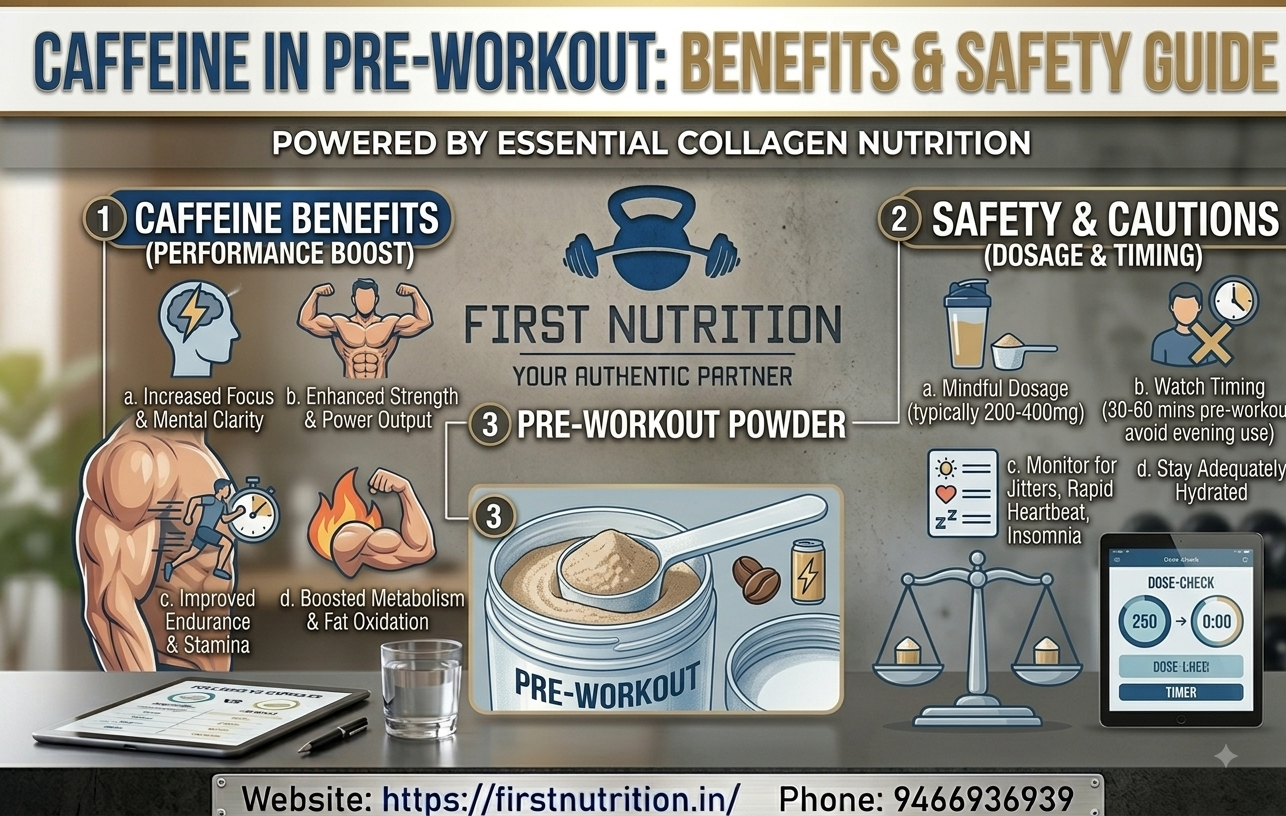
Caffeine is one of the most common ingredients in pre-workout supplements. Learn how it works, its potential benefits, when to take it, possible side effects, and how to choose a suitable pre-workout.
Caffeine in Pre-Workout: Benefits and Things to Know
Getting through a tough workout can be challenging, especially after a long day at work, an early morning, or a busy schedule. This is one reason pre-workout supplements have become popular among gym-goers and fitness enthusiasts.
One of the most common ingredients found in pre-workout formulas is caffeine.
Caffeine is well known for its ability to increase alertness and reduce feelings of tiredness. When used appropriately, it may also help support exercise performance, particularly during activities that require sustained effort or high intensity.
However, more caffeine doesn't necessarily mean a better workout. The amount, timing, your personal tolerance, and the time of day all matter.
Let's explore the benefits of caffeine in pre-workout, how it works, how to use it responsibly, and what beginners should know before adding it to their routine.
What Is Caffeine?
Caffeine is a naturally occurring stimulant found in foods and beverages such as:
Coffee
Tea
Cocoa
Energy drinks
Certain sports supplements
It primarily works by blocking adenosine receptors in the brain. Adenosine is associated with feelings of tiredness, so blocking its action can increase alertness and make you feel more awake.
This is why many people drink coffee before work, studying, or exercise.
Why Is Caffeine Added to Pre-Workout?
Pre-workout supplements are designed to prepare you physically and mentally for training.
Caffeine is commonly included because it can help support:
Alertness
Focus
Exercise performance
Perceived effort
A pre-workout may also contain other ingredients such as citrulline, beta-alanine, taurine, or electrolytes.
The combination depends on the specific product.
1. Caffeine Can Support Workout Energy
One of the main reasons people use caffeinated pre-workout is to feel more energetic before training.
If you feel tired after work or early in the morning, caffeine may help you feel more alert and ready to exercise.
However, caffeine doesn't actually replace sleep or provide the same nutritional value as food.
Think of caffeine as a performance aid—not a substitute for recovery.
2. It May Improve Mental Focus
A good workout isn't only about physical strength.
Concentration can be especially important during exercises that require proper technique and coordination.
Caffeine may increase alertness and help you feel more focused during training.
This can be particularly useful when you're:
Training after work
Exercising early in the morning
Performing long workouts
Doing repetitive cardio
Following a demanding training program
3. It May Support Exercise Performance
Research has found that caffeine can improve aspects of exercise performance in many situations, particularly endurance and high-intensity activities.
Potential benefits may include improved:
Exercise capacity
Alertness
Training intensity
The response varies between individuals, so one person's ideal caffeine intake may not be the same as another's.
4. It Can Reduce Perceived Effort
One interesting effect of caffeine is that exercise may feel less difficult for some people.
This doesn't mean the workout becomes effortless.
Rather, caffeine may influence how you perceive fatigue and exertion, potentially allowing you to maintain your training intensity more comfortably.
5. It Can Be Useful for Early-Morning Workouts
Early workouts can be difficult when you're still feeling sleepy.
A caffeinated pre-workout may help increase alertness before training.
However, if you regularly feel exhausted in the morning, improving your sleep routine should come before relying on stimulants.
6. It May Help During Endurance Training
Caffeine is widely used in sports nutrition, especially for endurance activities.
Runners, cyclists, swimmers, and other athletes may use caffeine strategically before longer sessions.
For recreational gym-goers, however, the amount of caffeine required may be considerably lower depending on individual tolerance.
How Much Caffeine Is in Pre-Workout?
The amount varies considerably between products.
Some pre-workouts contain relatively modest amounts, while highly stimulated formulas can contain substantially more.
Always check the Supplement Facts or nutrition label to determine exactly how much caffeine you're consuming per serving.
Also remember that caffeine from coffee, tea, energy drinks, and other supplements contributes to your total daily intake.
When Should You Take Caffeine Before a Workout?
Caffeine is commonly consumed around 30–60 minutes before exercise, although the ideal timing depends on the individual and the product.
Consider:
Your caffeine sensitivity
Workout time
Meal timing
Sleep schedule
Product instructions
Taking caffeinated pre-workout too close to bedtime can interfere with sleep.
Should Beginners Use Caffeinated Pre-Workout?
Beginners don't necessarily need pre-workout.
If you're new to the gym, focus first on:
Proper exercise technique
Balanced nutrition
Adequate protein
Hydration
Consistent training
Sufficient sleep
Once these basics are established, a pre-workout may be considered if you want additional support for energy and focus.
Start cautiously and understand your personal response to caffeine.
Caffeine Sensitivity Matters
People respond to caffeine differently.
Some individuals can consume caffeine in the afternoon without noticeable problems, while others may experience:
Nervousness
Restlessness
Increased heart rate
Shakiness
Difficulty sleeping
Digestive discomfort
If you are sensitive to caffeine, choose a lower-caffeine product or a stim-free pre-workout.
Caffeine and Sleep: An Important Consideration
This is one of the most important things to understand about caffeinated pre-workout.
Even if you don't feel extremely stimulated, caffeine can remain in your system for several hours.
Poor sleep can negatively affect:
Recovery
Training performance
Energy
Mood
Muscle-building progress
Therefore, if you train late at night, a stimulant-free pre-workout may be a better option.
Caffeine in Pre-Workout vs Coffee
Both coffee and pre-workout can provide caffeine, but they are not exactly the same.
Coffee
Simple source of caffeine
Easy to control
Usually contains few ingredients
Familiar option for many people
Pre-Workout
Usually combines caffeine with other performance-focused ingredients
May contain citrulline, beta-alanine, taurine, electrolytes, and more
Designed specifically around exercise
If you only want caffeine, coffee may be sufficient. If you want a combination of ingredients designed for training, a pre-workout may be more suitable.
Common Caffeine Mistakes
Taking Too Much
More caffeine doesn't automatically mean better performance.
Always follow the product's serving instructions.
Combining Multiple Stimulants
Avoid unknowingly combining pre-workout with large amounts of coffee, energy drinks, or other caffeinated supplements.
Taking It Too Late
Late-day caffeine can interfere with sleep.
Using It Every Time You Feel Tired
If you're constantly exhausted, address your sleep, nutrition, hydration, and recovery rather than continually increasing stimulant intake.
Ignoring Your Personal Tolerance
Your response to caffeine is individual.
Who Should Be Careful With Caffeine?
Caffeine isn't appropriate for everyone.
People who are pregnant, have certain medical conditions, experience significant caffeine sensitivity, or take medications that may interact with caffeine should consult a healthcare professional before using caffeinated pre-workout.
If you experience unusual or severe symptoms after consuming caffeine, stop using the product and seek appropriate medical advice.
How to Choose a Caffeinated Pre-Workout
Before buying a pre-workout, check:
Caffeine Amount
Know exactly how much caffeine you'll consume per serving.
Ingredient Transparency
Look for clearly listed ingredients and amounts.
Additional Ingredients
Consider whether you actually need ingredients such as citrulline, beta-alanine, or electrolytes.
Brand Reputation
Choose established brands with transparent labeling and quality manufacturing.
Authenticity
Buy from trusted retailers to reduce the risk of counterfeit supplements.
Pre-Workout Isn't a Replacement for Nutrition
Even the best pre-workout can't compensate for poor nutrition.
Before training, your overall diet should provide adequate:
Protein
Carbohydrates
Vitamins
Minerals
Fluids
For many people, a balanced meal or snack before exercise is more important than any supplement.
Why Choose First Nutrition for Pre-Workout Supplements?
First Nutrition offers a wide range of authentic sports nutrition products from trusted Indian and international brands.
Our collection includes:
Pre-workout supplements
Whey protein
Creatine
Mass gainers
BCAA and EAA
Collagen
Fish oil
Vitamins and minerals
Other fitness supplements
Whether you're a beginner or an experienced athlete, choosing genuine products and understanding their ingredients can help you make better supplement decisions.