


Fish Oil Capsules or Fish? Which Is Better for You?
Published on 24 Aug, 2026
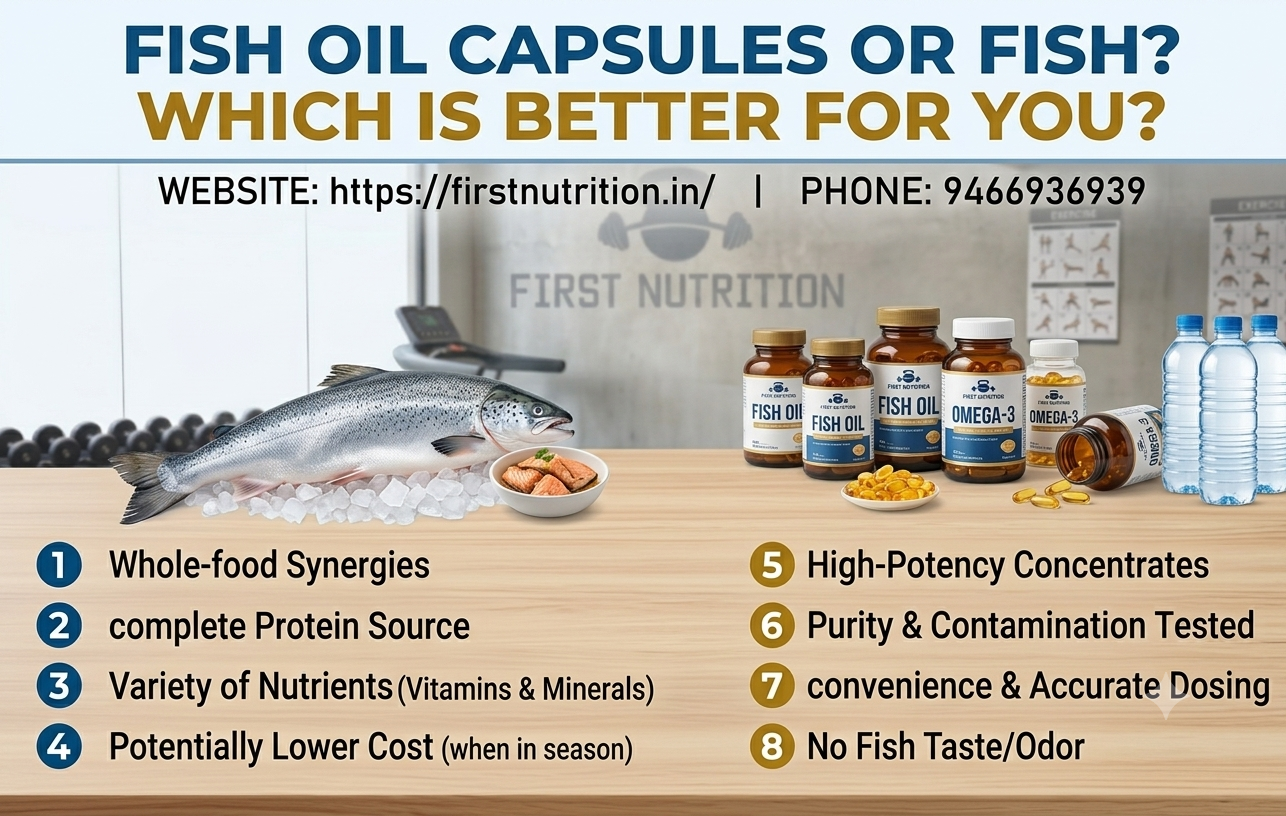
Should you eat fish or take fish oil capsules for omega-3? Learn the key differences between both options and find out which may fit your diet, fitness routine, and lifestyle.
Fish Oil Capsules vs Eating Fish: Which Is Better?
Omega-3 fatty acids are an important part of a balanced diet, and fish is one of the most well-known natural sources of these healthy fats. Fish oil capsules offer another convenient option for people who want to include omega-3s in their daily routine.
But if you're trying to decide between the two, an important question comes up:
Is it better to eat fish or take fish oil capsules?
The answer depends on what you're looking for.
Eating fish gives you much more than omega-3 fatty acids. It also provides protein and several vitamins and minerals. Fish oil capsules, on the other hand, are designed to provide concentrated marine omega-3s in a convenient form.
Let's look at the differences in detail.
Understanding Omega-3: EPA, DHA and ALA
Before comparing fish and supplements, it's useful to understand the main omega-3 fatty acids.
EPA
EPA, or eicosapentaenoic acid, is a marine omega-3 found in fatty fish and fish oil.
DHA
DHA, or docosahexaenoic acid, is another marine omega-3 commonly found in seafood and fish oil.
ALA
ALA, or alpha-linolenic acid, is mainly found in plant foods such as flaxseeds, chia seeds, and walnuts.
Your body can convert ALA into EPA and DHA, but the conversion is limited. This is one reason seafood and marine-based omega-3 supplements are popular sources of EPA and DHA.
What Do You Get From Eating Fish?
Fish is a complete food rather than simply a source of omega-3.
Depending on the species, a serving can provide:
High-quality protein
EPA
DHA
Vitamin B12
Vitamin D
Other micronutrients
For someone who is physically active, this combination can be especially useful.
A meal containing grilled fish, rice, and vegetables, for example, can provide protein, carbohydrates, healthy fats, and micronutrients in one meal.
What Do Fish Oil Capsules Provide?
Fish oil capsules primarily provide omega-3 fatty acids, particularly EPA and DHA.
Their biggest advantage is convenience.
You don't need to:
Cook fish
Plan a seafood meal
Store fresh seafood
Prepare a recipe
You simply take the recommended serving according to the product label.
This can make fish oil attractive to people with busy schedules.
The Biggest Difference: Whole Food vs Supplement
The simplest way to understand the difference is:
Fish = complete food
Fish oil = concentrated supplement
Eating fish provides nutrients that aren't necessarily present in a standard fish oil capsule.
Fish oil can be useful when your diet doesn't regularly include oily fish, but it doesn't fully replace the nutritional value of a fish meal.
Fish Has an Advantage for Protein
If you're focused on muscle building or fitness, this is an important difference.
Fish provides high-quality protein containing essential amino acids.
Protein supports:
Muscle repair
Recovery
Normal body functions
Fish oil capsules contain very little or no meaningful protein.
So if you're choosing between a fish meal and a fish oil capsule, the meal provides considerably more nutritional value overall.
Fish Oil Has an Advantage in Convenience
Preparing fish isn't always practical.
You may:
Work long hours
Travel frequently
Live in a place where fresh seafood isn't easily available
Dislike the taste of fish
Follow a diet with limited seafood
In these situations, fish oil capsules can be an easy way to add EPA and DHA to your supplement routine.
Which Has More Omega-3?
There's no single answer because the amount varies.
Different fish species contain different amounts of EPA and DHA.
Likewise, fish oil supplements can have very different concentrations.
For example, one product may contain a relatively small amount of EPA and DHA per capsule, while another may be more concentrated.
Always check the nutrition or Supplement Facts panel.
Don't assume that a capsule labeled "1000 mg fish oil" contains 1000 mg of EPA and DHA.
Why the EPA and DHA Numbers Matter
When comparing fish oil products, look beyond the front label.
Look specifically for:
EPA: ___ mg
DHA: ___ mg
These numbers tell you how much of the two major marine omega-3s you're actually getting.
This makes it easier to compare different products.
Is Fish Better for Fitness?
For most fitness enthusiasts, whole fish can be an excellent addition to a balanced diet.
It can provide:
Protein for muscle maintenance
Micronutrients
A satisfying meal
For someone who already eats fish regularly, adding a fish oil supplement may not always be necessary.
However, individual nutritional needs differ.
Is Fish Oil Better for Busy People?
This is where supplements can be particularly convenient.
Imagine someone who works from 9 AM to 7 PM and rarely cooks seafood.
Adding fish oil to their daily routine may be much easier than preparing fish several times a week.
Convenience can make it easier to maintain a consistent nutrition routine.
How to Choose Between Fish and Fish Oil
Consider your current diet.
Choose Fish More Often If:
You enjoy seafood.
You want a high-protein meal.
You want omega-3s plus other nutrients.
You can safely and regularly include seafood in your diet.
Consider Fish Oil If:
You rarely eat fish.
You don't enjoy seafood.
You want a convenient EPA/DHA supplement.
Your lifestyle makes regular seafood meals difficult.
You Can Also Use Both
These options don't have to be mutually exclusive.
A person might eat fish as part of their normal diet and use a supplement when dietary intake is limited.
However, taking additional supplements isn't automatically better. Consider your overall intake and follow the product directions.
What About Fish Quality and Contaminants?
When eating fish regularly, variety matters.
Some fish can contain higher levels of environmental contaminants, including mercury.
This is particularly important for:
Pregnant women
People planning pregnancy
Children
People who eat large quantities of seafood
Choose fish varieties appropriate for your circumstances and follow reputable food-safety guidance.
What Should You Look for in Fish Oil?
If you decide that fish oil is suitable for your routine, consider these factors:
1. EPA + DHA Content
Look at the actual amount of EPA and DHA per serving.
2. Product Quality
Choose products from reputable manufacturers.
3. Clear Labeling
The supplement should clearly state its ingredients and serving size.
4. Authenticity
Purchase from reliable retailers to reduce the risk of counterfeit supplements.
5. Storage
Follow the manufacturer's storage instructions.
When Should You Take Fish Oil?
Fish oil doesn't need to be taken immediately before or after a workout.
Unlike pre-workout or some sports supplements, its purpose isn't to provide an instant performance boost.
Many people take it with a meal as part of their daily routine.
Follow the specific instructions provided on your product
Can Gym-Goers Take Fish Oil?
Fish oil can be part of a fitness-focused nutrition plan, but it shouldn't be considered a substitute for core sports nutrition.
If your goal is muscle gain, your priorities should include:
Adequate calories
Sufficient protein
Progressive resistance training
Quality sleep
Hydration
A balanced diet
Supplements can complement these habits.
Fish Oil vs Fish: Quick Comparison
Common Mistakes When Choosing Fish Oil
Mistake 1: Looking Only at Total Fish Oil
A "1000 mg fish oil" capsule doesn't necessarily provide 1000 mg of EPA + DHA.
Mistake 2: Assuming More Is Always Better
Higher doses aren't automatically better for everyone.
Mistake 3: Using Supplements Instead of Food
Supplements should complement a nutritious diet rather than replace it.
Mistake 4: Ignoring Other Sources
Remember that omega-3 intake can come from seafood and other dietary sources.
Mistake 5: Buying From Untrusted Sellers
Always consider product authenticity and brand reputation.
Fish Oil at First Nutrition
If you're looking to add omega-3 supplements to your fitness routine, First Nutrition offers a range of authentic sports nutrition and wellness products.
Along with fish oil, you can explore products such as:
Whey protein
Isolate protein
Creatine
Mass gainers
Pre-workout
Collagen
BCAA
EAA
Vitamins and minerals
Choosing the right supplement should always begin with understanding your diet and individual goals.