

How Many Calories Do You Need for Healthy Weight Gain?
Published on 18 Aug, 2026
Want to gain weight in a healthy way? Learn how to estimate your calorie needs, create a suitable calorie surplus, choose nutritious foods, and use supplements such as mass gainers and whey protein effectively.
How Many Calories Do You Need for Healthy Weight Gain?
Gaining weight may sound simple—just eat more calories than you burn. However, healthy weight gain requires more than simply increasing your food intake.
If your goal is to build muscle and increase body weight, you need the right combination of calories, protein, carbohydrates, healthy fats, strength training, and recovery. Eating too little may prevent progress, while consuming excessive calories can result in unnecessary fat gain.
So, how many calories do you need for healthy weight gain?
The answer depends on your current body weight, height, age, activity level, metabolism, and fitness goals. In this guide, we'll explain how calorie surplus works and how you can approach weight gain in a practical way.
What Is a Calorie Surplus?
A calorie surplus means consuming more calories than your body uses throughout the day.
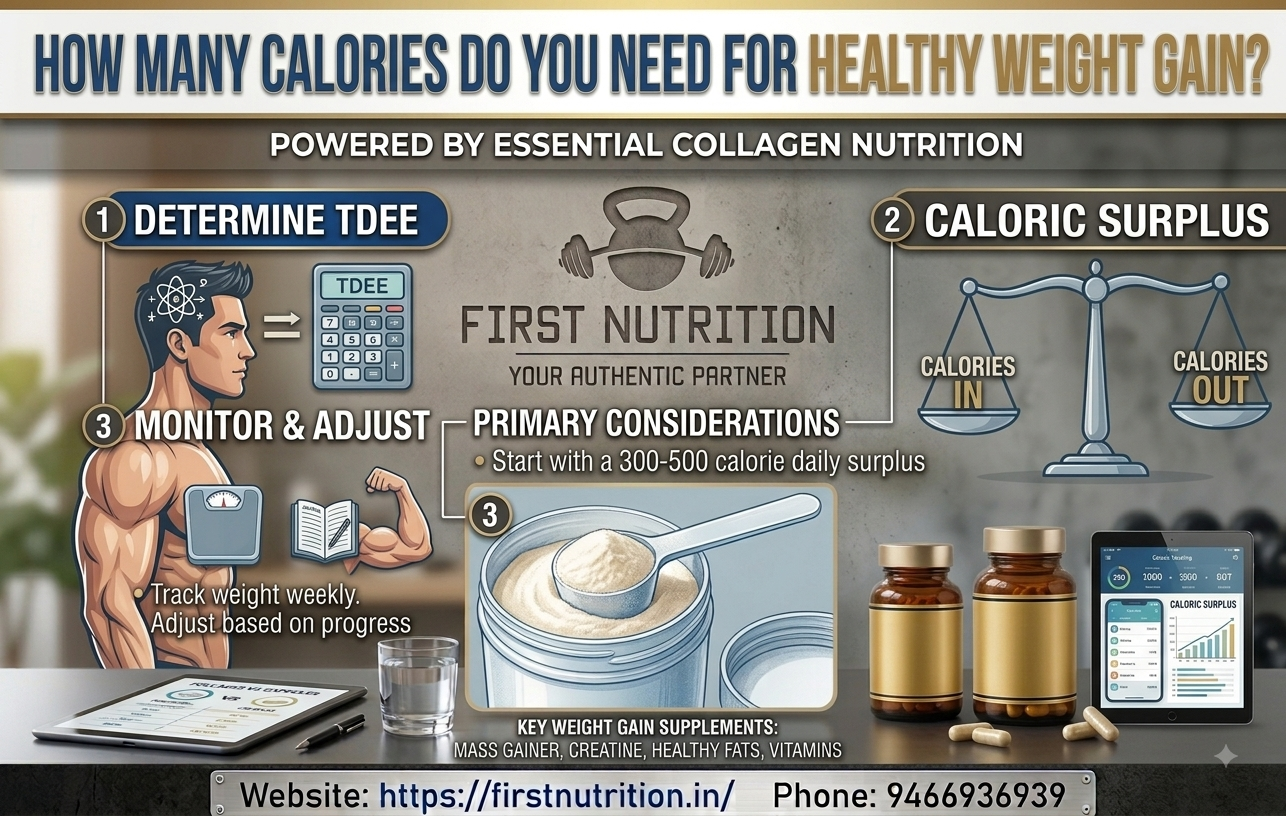
For example, if your body requires approximately 2,400 calories per day to maintain your current weight and you consistently consume around 2,700 calories, you have a surplus of approximately 300 calories.
That additional energy can support weight gain.
However, the ideal surplus varies from person to person.
A Practical Starting Point
For many adults trying to gain weight gradually, a modest surplus of around 250–500 calories per day can be a reasonable starting approach.
Your results should be monitored over several weeks and your calorie intake adjusted based on your progress.
How to Estimate Your Daily Calorie Needs
Your daily calorie requirement is influenced by several factors:
Age
Sex
Height
Body weight
Daily activity
Exercise frequency
Individual metabolism
Fitness goals
A useful starting point is to estimate your maintenance calories—the amount of energy you need to maintain your current body weight.
You can then add a moderate calorie surplus.
For example:
Maintenance: 2,400 calories
Surplus: +300 calories
Target: approximately 2,700 calories/day
This is only an example. Individual requirements can vary significantly.
Why a Moderate Calorie Surplus Is Better
You may think that eating as many calories as possible will help you gain weight faster. While it can increase body weight, excessive calorie intake may result in more body-fat accumulation.
A moderate surplus can make it easier to:
Gain weight gradually
Support muscle growth
Maintain better diet quality
Manage body-fat gain
Stay consistent with your nutrition plan
Healthy weight gain is generally a gradual process.
How Much Protein Do You Need?
Calories provide energy, but protein provides the amino acids your body needs to build and maintain muscle.
For people who regularly perform resistance training, a daily protein intake around 1.6–2.2 grams per kilogram of body weight is commonly used as a practical range for maximizing muscle-building adaptations.
For example, a person weighing 70 kg might aim for roughly:
70 × 1.6 = 112 g protein
to
70 × 2.2 = 154 g protein
per day.
Your exact needs may differ depending on your goals, diet, training, and individual circumstances.
Don't Forget Carbohydrates
Carbohydrates are an important energy source, particularly for people who train regularly.
Good carbohydrate sources include:
Rice
Oats
Potatoes
Sweet potatoes
Whole-grain bread
Pasta
Bananas
Other fruits
Beans and legumes
Including enough carbohydrates can help support workout performance and make it easier to reach your calorie target.
Healthy Fats for Weight Gain
Healthy fats are calorie-dense, meaning you can increase your calorie intake without eating extremely large portions.
Good choices include:
Peanut butter
Almonds
Walnuts
Seeds
Avocado
Olive oil
Nut butters
Fatty fish
Adding moderate amounts of healthy fats to meals can be an easy way to increase calories.
Best Foods for Healthy Weight Gain
Instead of relying on highly processed foods, focus on nutrient-dense options.
Protein-Rich Foods
Eggs
Chicken
Fish
Paneer
Greek yogurt
Milk
Lentils
Beans
High-Calorie Nutritious Foods
Peanut butter
Nuts
Seeds
Oats
Whole-grain products
Avocado
Carbohydrate Sources
Rice
Potatoes
Pasta
Oats
Fruits
Whole grains
Combining these foods can help create balanced, calorie-rich meals.
Sample Weight Gain Meal Plan
Here's a simple example of how you might structure your meals:
Breakfast
Oats + milk + banana + peanut butter + eggs
Mid-Morning Snack
Greek yogurt + nuts + fruit
Lunch
Rice + chicken/paneer + vegetables + yogurt
Pre-Workout
Banana + oats or another carbohydrate-rich snack
Post-Workout
Whey protein + banana
Dinner
Rice or potatoes + fish/chicken/paneer + vegetables
Before Bed
Milk or Greek yogurt with nuts
Your actual calorie and protein requirements should be personalized to your body and goals.
Can Mass Gainers Help With Weight Gain?
Yes, mass gainers can be useful for people who struggle to consume enough calories through regular food.
A mass gainer typically provides a combination of:
Protein
Carbohydrates
Sometimes fats, vitamins, and minerals
For example, someone with a busy schedule or low appetite may find it easier to drink a calorie-rich shake than consume another large meal.
However, mass gainers should complement your diet rather than replace nutritious meals.
Whey Protein vs Mass Gainer for Weight Gain
Both supplements can be useful, but they serve different purposes.
Whey Protein
Best suited for increasing protein intake without adding a large number of calories.
Mass Gainer
Best suited for people who need additional calories as well as protein.
If you already consume enough calories but struggle with protein, whey protein may be more appropriate.
If you struggle to consume both calories and protein, a mass gainer may be more convenient.
Strength Training Is Essential for Muscle Gain
If your goal is to gain muscle rather than simply body weight, nutrition should be combined with resistance training.
Focus on exercises such as:
Squats
Deadlifts
Bench press
Rows
Overhead press
Pull-ups
Lunges
Use progressive overload by gradually increasing training difficulty over time.
How Fast Should You Gain Weight?
There isn't one perfect rate for everyone.
A slower, controlled approach is generally preferable when your goal is to maximize lean mass and limit unnecessary fat gain.
Track your body weight regularly and look at the average trend over several weeks, rather than reacting to daily changes.
Body weight naturally fluctuates due to:
Water
Food intake
Sodium
Glycogen
Digestion
What If You're Not Gaining Weight?
If your body weight isn't increasing after several weeks, your calorie intake may not actually be above your maintenance needs.
Consider:
Increasing portion sizes
Adding calorie-dense foods
Adding a nutritious snack
Including a mass gainer if appropriate
Tracking your food intake more accurately
Make small adjustments rather than dramatically increasing calories overnight.
Common Weight Gain Mistakes
Eating Too Much Junk Food
Fast food can increase calories, but it shouldn't be the foundation of your diet.
Ignoring Protein
Calories alone don't provide the nutritional foundation needed for muscle development.
Skipping Strength Training
Without resistance training, a calorie surplus won't specifically direct weight gain toward muscle.
Not Tracking Progress
Without monitoring your weight and training performance, it can be difficult to know whether your approach is working.
Expecting Fast Results
Building muscle and gaining healthy weight takes time.
Why Choose First Nutrition for Weight Gain Supplements?
At First Nutrition, you can find a wide range of authentic sports nutrition products designed to complement different fitness goals.
Our range includes:
Whey protein
Mass gainers
Creatine
Pre-workout
BCAA and EAA
Collagen
Fish oil
Vitamins and minerals
Other sports nutrition supplements
Whether you're looking to increase your protein intake or add convenient calories to your diet, choosing genuine products from trusted brands is important.