

Lean Bulk vs Dirty Bulk: Which Approach Is Better for Muscle Gain?
Published on 03 Sep, 2026
Trying to gain muscle without unnecessary fat? Learn the difference between lean bulk and dirty bulk, how each approach works, what to eat, and why a controlled calorie surplus is usually a smarter long-term strategy.
Lean Bulk vs Dirty Bulk: Understanding the Difference
Building muscle requires more than simply spending hours in the gym. Your nutrition, calorie intake, protein consumption, recovery, and training program all influence your results.
When people start a muscle-building phase, they often come across two popular approaches: lean bulking and dirty bulking.
Both approaches are designed around gaining body weight and supporting muscle growth, but they take very different paths.
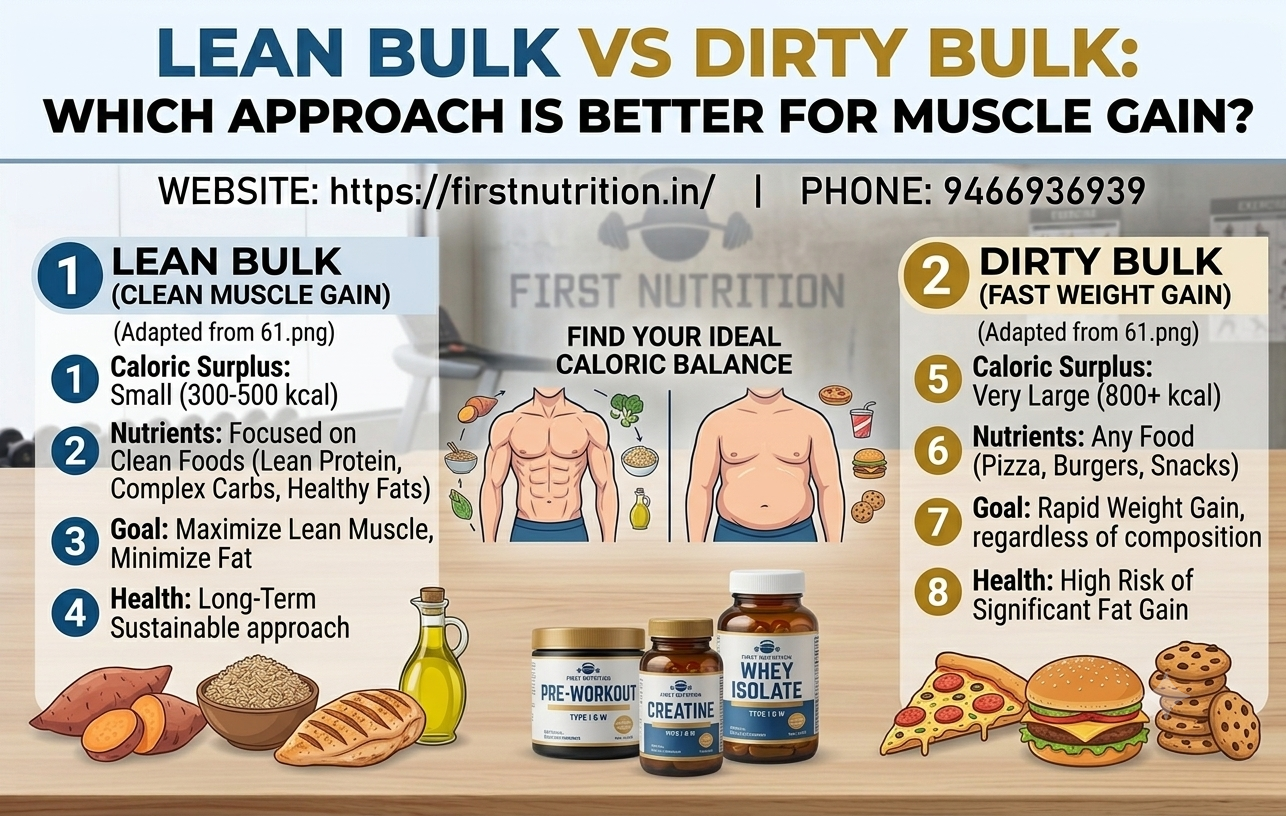
A lean bulk focuses on a controlled calorie surplus and nutrient-dense foods, while a dirty bulk generally involves eating a much larger surplus with fewer restrictions on food choices.
But does eating more calories actually mean building more muscle?
Not necessarily. Research on diets designed to increase lean mass supports the use of a calorie surplus, while the size and composition of that surplus can influence the type of weight gained.
Let's take a closer look at both approaches.
What Is a Lean Bulk?
A lean bulk is a structured approach to gaining muscle while attempting to keep unnecessary fat gain under control.
Instead of dramatically increasing food intake, you consume a modest calorie surplus above your maintenance needs. Your meals are generally built around quality sources of protein, carbohydrates, healthy fats, fruits, vegetables, and other nutrient-rich foods.
The objective isn't to gain weight as quickly as possible.
The objective is to create an environment that supports progressive resistance training, recovery, and muscle growth while managing the amount of body fat gained during the process.
Main Characteristics of Lean Bulking
Moderate calorie surplus
Adequate daily protein
Mostly nutrient-dense foods
Progressive strength training
Regular monitoring of body weight
Attention to recovery and sleep
Adjustments based on progress
A lean bulk can require more patience because weight gain is intentionally controlled.
What Is a Dirty Bulk?
A dirty bulk takes a much less restrictive approach to gaining weight.
The basic idea is to consume a large number of calories, often without paying much attention to food quality. High-calorie foods such as burgers, pizza, fried foods, desserts, sugary drinks, and processed snacks may become frequent parts of the diet.
The attraction is simple: eating more calories can make gaining body weight easier, especially for people who struggle with appetite.
However, a larger calorie surplus doesn't mean your body can build muscle at the same rate. Excess calories can also contribute to increased body fat. Cleveland Clinic notes that dirty bulking can result in substantial fat gain without necessarily providing the expected improvement in muscle or performance.
Lean Bulk vs Dirty Bulk: The Major Differences
Understanding the differences makes it easier to decide which strategy fits your goals.
The most important distinction is control.
A lean bulk tries to give your body enough additional energy to support growth without turning the gaining phase into unrestricted overeating.
Why Does a Calorie Surplus Matter for Muscle Growth?
Your body needs adequate energy to support training, recovery, and the processes involved in building new tissue.
For people focused on increasing lean mass, a sustained calorie surplus can help support anabolic processes and the demands of resistance training. However, the size of that surplus matters.
This is where dirty bulking can become counterproductive.
Imagine someone needs approximately 2,500 calories per day to maintain their body weight.
Instead of eating a moderate amount above maintenance, they may suddenly consume 3,500–4,000 calories every day.
The scale may increase quickly, but that doesn't mean all of the additional weight is muscle.
Some of the increase can come from:
Body fat
Water
Glycogen
Food stored in the digestive system
Muscle tissue
Muscle growth is a biological process with limitations. Simply adding more food doesn't guarantee proportionally faster muscle development.
Protein: A Key Part of a Successful Bulk
Whether you choose a lean bulk or a more aggressive approach, protein should remain an important part of your nutrition plan.
For most exercising individuals, the International Society of Sports Nutrition states that approximately 1.4–2.0 g of protein per kilogram of body weight per day is sufficient for building and maintaining muscle.
For example, someone weighing 70 kg may need roughly 98–140 grams of protein per day depending on their individual circumstances.
Good protein sources include:
Eggs
Chicken
Fish
Lean meat
Milk and dairy products
Greek yogurt
Paneer
Soy and other plant proteins
Whey protein
A protein supplement can be convenient when meeting your daily protein target through food becomes difficult.
What Should You Eat During a Lean Bulk?
A good lean-bulking diet doesn't need to be complicated.
Focus on creating balanced meals that provide sufficient calories and nutrients.
Protein-Rich Foods
Include eggs, chicken, fish, paneer, dairy products, legumes, soy products, and quality protein supplements.
Carbohydrate Sources
Rice, oats, potatoes, whole grains, fruits, and other carbohydrate-rich foods can provide energy for training.
Healthy Fat Sources
Nuts, seeds, peanut butter, avocado, olive oil, and other sources of unsaturated fats can help increase calorie intake while contributing useful nutrients.
Fruits and Vegetables
Don't eliminate vegetables and fruits simply because you're trying to gain weight. They provide vitamins, minerals, fiber, and other important nutrients.
The goal is not to eat "perfectly."
The goal is to make most of your diet nutritious while leaving room for flexibility.
Can You Eat Junk Food During a Lean Bulk?
Yes, occasional treats can fit into a balanced diet.
A lean bulk does not mean you have to completely eliminate pizza, burgers, desserts, or other foods you enjoy.
The difference is frequency and overall dietary quality.
If most of your calories come from nutrient-dense foods and your overall intake is appropriately controlled, an occasional higher-calorie meal doesn't automatically ruin your progress.
The problem occurs when highly processed, calorie-dense foods become the foundation of the diet.
Is Dirty Bulking Ever Useful?
Dirty bulking can appear attractive for people who struggle to consume enough calories.
Someone with a very high activity level or low appetite may find it difficult to consistently reach a calorie surplus using only large volumes of low-calorie foods.
However, increasing calories does not require relying heavily on junk food.
Instead, calorie-dense but nutritious choices can make eating enough easier.
For example:
Peanut butter with oats
Milk-based smoothies
Rice with eggs or chicken
Nuts and dried fruits
Yogurt with fruit
Homemade high-calorie shakes
Whole-grain sandwiches
This provides additional energy while still keeping nutritional quality in mind.
Lean Bulk and Mass Gainers
A mass gainer can be useful when someone finds it difficult to consume enough calories through regular meals.
However, a mass gainer should be considered a convenient nutrition tool rather than a shortcut to muscle growth.
The quality of the overall diet, resistance training, protein intake, calorie surplus, and recovery still matter.
If you're already eating enough calories and protein, adding a large amount of extra calories through a mass gainer may simply make it easier to exceed your needs.
Use the product according to its label and adjust your overall food intake based on your goals.
How to Track Your Lean Bulk Progress
One of the biggest advantages of a controlled bulk is that you can monitor what's happening and make adjustments.
Don't rely only on the weighing scale.
Track several factors:
1. Body Weight
Take regular measurements under similar conditions and focus on the trend rather than daily fluctuations.
2. Strength
Record your major exercises and monitor whether your performance is improving over time.
3. Measurements
Track areas such as your arms, chest, waist, and thighs.
4. Progress Photos
Photos taken under similar lighting and conditions can help you notice changes that the scale cannot show.
5. Energy and Recovery
Pay attention to your gym performance, sleep, hunger, and general recovery.
If body weight is increasing much faster than intended and waist measurements are rising quickly, your calorie intake may need adjustment.
Common Mistakes During Bulking
Eating Everything in Sight
More food isn't automatically more muscle.
Ignoring Protein
Calories matter, but adequate protein is also important for supporting muscle growth.
Skipping Vegetables and Fruits
Bulking shouldn't mean abandoning overall nutrition.
Training Without Progression
Eating more while performing the same workouts indefinitely won't maximize your results.
Changing the Plan Too Frequently
Muscle growth takes time. Constantly changing calories, exercises, and supplements makes progress harder to evaluate.
Expecting Supplements to Do the Work
Whey protein, creatine, and mass gainers can complement a fitness routine, but they don't replace proper training and nutrition.
Lean Bulk vs Dirty Bulk: Which Is Better?
For most people whose goal is to build muscle while limiting unnecessary fat gain, a controlled lean bulk is the better choice.
A dirty bulk can increase body weight quickly, but faster weight gain isn't necessarily faster muscle gain. Excess calorie intake can lead to additional fat accumulation, which may mean spending more time dieting later.
A lean bulk takes more patience, but it allows you to monitor your progress and adjust your calorie intake as your body changes.
Instead of asking, "How much can I eat?"
A better question is:
"How much do I actually need to support my training and muscle-building goals?"