


Collagen Sources: Marine vs Bovine – Which One Is Better?
Published on 03 Sep, 2026
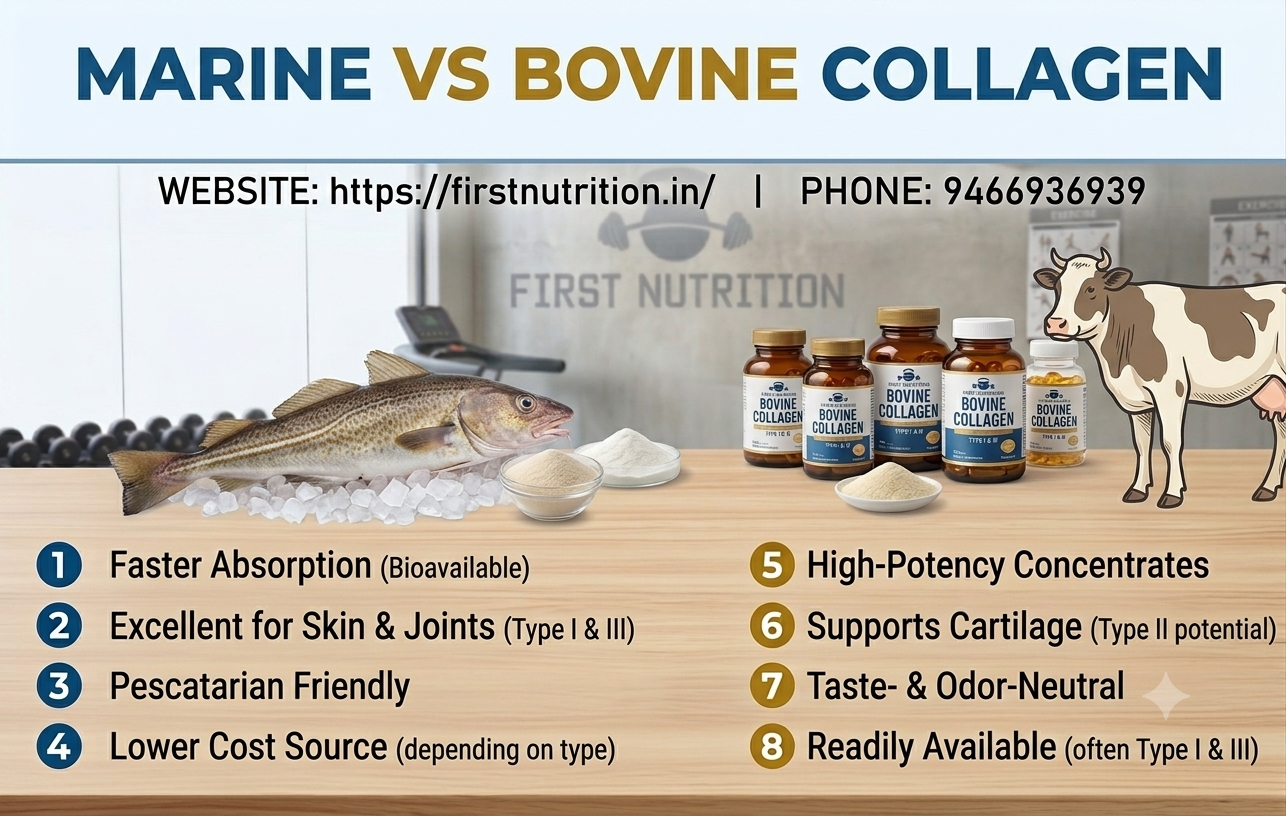
Marine and bovine collagen are two popular sources of collagen supplements. Learn about their differences, benefits, types, absorption, dietary considerations, and how to choose the right collagen for your daily nutrition routine.
Collagen Sources: Marine vs Bovine
Collagen has become a popular addition to nutrition and wellness routines, especially among people interested in supporting skin, joints, bones, and overall connective tissue health. However, not all collagen supplements come from the same source.
The two commonly available options are marine collagen and bovine collagen. While both provide collagen peptides that can be incorporated into the diet, their sources and collagen types can differ.
So, when comparing marine vs bovine collagen, which one should you choose?
The answer depends on your dietary preferences, nutritional goals, product formulation, and the specific type of collagen you are looking for.
What Is Collagen?
Collagen is a structural protein naturally found throughout the body. It contributes to the structure of tissues such as skin, bones, cartilage, tendons, and ligaments.
As part of normal aging, the body's natural collagen production gradually changes. This is one reason collagen supplements have become popular among adults looking to maintain their nutrition and wellness routines.
Collagen supplements are generally made from animal-derived sources and are often processed into collagen peptides, which are easier to mix into beverages and foods.
The source of the collagen is one of the main differences between marine and bovine products.
What Is Marine Collagen?
Marine collagen is typically produced from fish-derived materials, often using parts of fish that might otherwise be discarded during processing.
It is particularly known for providing Type I collagen, which is abundant in skin, bones, tendons, and other connective tissues.
Marine collagen is commonly available as a powder, capsule, or liquid supplement. Hydrolyzed marine collagen is broken down into smaller peptides, making it convenient for everyday consumption.
Potential Features of Marine Collagen
Usually sourced from fish
Commonly associated with Type I collagen
Available in hydrolyzed peptide forms
Suitable for people who prefer a fish-derived collagen source
Often incorporated into beauty and wellness products
However, people with fish allergies should carefully check product labels and consult a healthcare professional before using marine collagen.
What Is Bovine Collagen?
Bovine collagen comes primarily from cattle-derived sources such as hides and bones. Like marine collagen, it can be processed into hydrolyzed collagen peptides for use in supplements.
Bovine collagen products commonly contain Type I and Type III collagen. These collagen types are widely distributed throughout the body's connective tissues.
Because bovine collagen is widely used in the supplement industry, it is available in many different formulations, including powders, capsules, and flavored products.
Potential Features of Bovine Collagen
Derived from cattle
Commonly provides Type I and Type III collagen
Widely available in supplement formulations
Often available as hydrolyzed collagen peptides
Can be easily added to shakes, smoothies, or other foods
For consumers who avoid beef-derived ingredients, bovine collagen may not be the preferred option.
Marine vs Bovine Collagen: Key Differences
Although both sources can provide collagen peptides, there are several differences worth understanding.
The biggest difference is where the collagen comes from and which collagen types it commonly provides.
Which Collagen Is Better for Skin?
Both marine and bovine collagen can provide Type I collagen, which is an important structural component of skin.
Marine collagen is frequently marketed toward beauty-focused consumers because it is predominantly Type I collagen. Bovine collagen can also be a useful option because it commonly supplies Type I collagen along with Type III collagen.
Rather than choosing solely based on the source, consider the collagen peptide content, serving size, ingredient quality, testing, and overall product formulation.
A good collagen supplement should complement a balanced diet and healthy lifestyle rather than replace them.
Marine vs Bovine Collagen for Joint Support
Collagen is also commonly included in nutrition routines focused on joints and connective tissues.
Bovine collagen provides Type I and III collagen, while marine collagen is predominantly associated with Type I collagen. However, the source alone does not determine whether a supplement is the right choice for your specific needs.
If joint nutrition is your main priority, look beyond the word "collagen" on the front of the package. Check the ingredient panel and understand what type and quantity of collagen peptides the product actually provides.
People experiencing persistent joint pain or other symptoms should speak with a healthcare professional rather than relying solely on supplements.
Does Marine Collagen Absorb Better Than Bovine Collagen?
You may have heard claims that marine collagen is automatically better absorbed than bovine collagen.
This is an area where marketing claims should be approached carefully.
Hydrolyzed collagen from different animal sources is broken down into smaller peptides during processing. The body's digestion and absorption processes involve breaking dietary proteins and peptides down further.
Therefore, the source alone should not be the only factor used to determine supplement quality.
Instead, consider:
Whether the collagen is hydrolyzed
The amount of collagen peptides per serving
Ingredient transparency
Manufacturing standards
Third-party testing where available
Your dietary preferences and requirements
Marine Collagen vs Bovine Collagen: Which Should You Choose?
There isn't one universally best option.
Choose Marine Collagen If:
You prefer a fish-derived collagen source.
You are specifically looking for a Type I collagen product.
You avoid bovine-derived ingredients.
You prefer collagen products commonly marketed for beauty and wellness routines.
Consider Bovine Collagen If:
You are comfortable consuming cattle-derived ingredients.
You want a collagen source commonly containing Type I and Type III collagen.
You prefer having a wider selection of collagen formulations.
You want a versatile collagen supplement for your general nutrition routine.
Your personal dietary choices and the actual formulation of the product should guide your decision.
What Should You Check Before Buying Collagen?
Choosing between marine and bovine collagen is only the first step. Product quality also matters.
Before purchasing, check:
1. Collagen Type
Look at whether the product specifies Type I, Type III, or another collagen type.
2. Collagen Peptide Quantity
Check how much collagen peptides are provided per serving instead of judging a product only by its package size.
3. Source
Confirm whether the product is marine, bovine, or another source that fits your dietary preferences.
4. Additional Ingredients
Review sweeteners, flavors, vitamins, minerals, and other added ingredients, particularly if you have dietary restrictions.
5. Authenticity
Purchase supplements from reliable sellers and check packaging details, batch information, expiry dates, and authenticity features where applicable.
6. Storage Instructions
Follow the manufacturer's storage recommendations to maintain product quality.
Can Collagen Be Part of a Daily Nutrition Routine?
For many people, collagen can be conveniently added to an everyday nutrition routine. Collagen powder can be mixed with water, smoothies, shakes, yogurt, or other suitable foods depending on the product instructions.
However, collagen should not be viewed as a replacement for complete dietary protein.
A balanced diet containing adequate protein, fruits, vegetables, whole grains, healthy fats, and sufficient fluids remains important for overall nutrition.
If you have a medical condition, food allergy, are pregnant or breastfeeding, or regularly take medication, consider speaking with a healthcare professional before adding a new supplement.
Marine vs Bovine Collagen: The Final Verdict
So, marine collagen vs bovine collagen — which is better?
Neither source is automatically better for everyone.
Marine collagen is a fish-derived option commonly associated with Type I collagen and may appeal to consumers looking for a marine source. Bovine collagen commonly provides Types I and III and is one of the most widely available collagen sources.
The better choice depends on your dietary preferences, nutritional goals, collagen type, serving size, product quality, and overall lifestyle.
Instead of choosing a collagen supplement based only on marketing claims, read the label carefully and choose a transparent, quality product that fits your needs.
For anyone building a consistent wellness routine, collagen can be considered alongside a balanced diet, regular physical activity, adequate sleep, and proper hydration.